


The Tape Recorder and the Bog: Preserving Living Voice in the Algorithmic Age
By:
Gale O’ Carroll
Nonfiction by Gale O’ Carroll
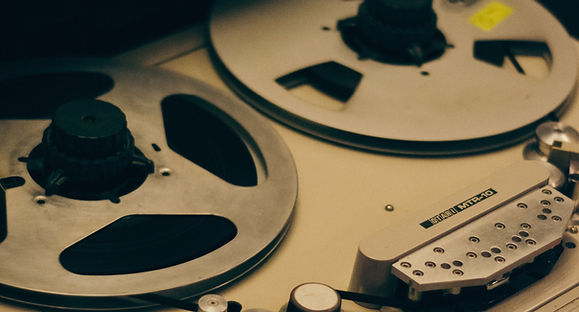
There is a reel of quarter-inch tape in the National Folklore Collection numbered T0119.
It was recorded in November 1960 in Caladh Mhaínse, County Galway. The informant was Seósamh Ó Dubháin; the collectors were Leo Corduff and Proinnsias de Búrca. Ten tracks survive. The catalogue makes a small, accidental poem of them: singing; conversation; the division of land; politics; eel fishing; turf; another song; the Vikings; Seán Bradach; another song.
This may be one reason folklore archives are so moving, I don’t mean because they contain the great ceremonial things a country decides to remember, but because they contain what almost escaped that decision. Fishing, games, weather, a cure for something, a quarrel about land, the correct or incorrect way somebody pronounced the name of a field, a song that has been recorded because a collector just happened to arrive right before the person who knew it died.
On T0119, even the categories feel unstable. Lore. Conversation. Singing. What else should a human voice be called?
The history of preservation is full of machines that arrive late and just in time.
The Irish Folklore Commission sent collectors out with notebooks and Ediphone machines, cutting speech into wax cylinders. Later came acetate discs, then tape. The equipment improved; the archive swelled. What now sits in the National Folklore Collection includes thousands of manuscript volumes and more than twelve thousand hours of audio. The earliest sound recording in the archive dates to 1897. In the late nineteen-forties, the Commission acquired an acetate-disc system and used it, among other things, to record some of the last native speakers of Manx.
The heroic version of this history is intriguing. Just picture the collector setting out with the cumbersome machine; the road thinning, rain, a house somewhere beyond the paved world. He has come for the story. But this makes the machine too noble.
The machine is not animate and couldn’t care less about the story. It is merely interested in whether there is current, the microphone works, the disc is turning. It has no instinct for what will disappear. The urgency belongs to the person carrying it.
And, behind that person, to the appalling fact that voices die. The bog knows something about this.
Across northern Europe, peat has returned human beings to us with a certain indecency of recognition. Skin remains, hair remains, fingernails. A face laid into the ground two thousand years ago has the potential to retain enough of itself that we do not first think ‘archaeological specimen’ but ‘person’. Raised bogs are cold, acidic and poor in oxygen; decay slows there. Sphagnum contributes to conditions that preserve soft tissue with an efficiency ordinary burial rarely manages.
We call this preservation, and it is worth noticing what a peculiar word that is.
A bog preserves a body by making it useless to life, such that nothing metabolises or heals or changes its mind. Basically, the traffic between organism and world has stopped.
The better the bog does its work, the less the body participates in time.
Archives inherit some of this strangeness. Their purpose is rescue, but rescue can sometimes resemble arrest. The song is taken from a mouth and put somewhere safe, the tale leaves the kitchen, the boat, the wake, the road, and then it enters a box. Later the box becomes a shelf, then the shelf becomes a catalogue, and then the catalogue becomes a website.
Now the dead can be searched.
This is, unquestionably, a miracle.
Dúchas.ie currently makes hundreds of thousands of manuscript pages, thousands of photographs and hundreds of hours of digitised audio available to anybody with a connection. Material that once required travel, permission and knowledge of an archive’s internal arrangements can appear on a laptop in Malmö or Lagos or Melbourne before the tea has gone cold.
It could be argued that no serious defence of oral culture should require obscurity. Yet something happens when access turns into retrieval.
Type a word.
Receive a story.
Type another.
Receive seventeen versions.
Search a placename. Filter by county. Sort.
Enounter improves. Then encounter diminishes.
We are now building systems in which retrieval is no longer the end of the process. The archive can be transcribed automatically, translated, summarised, tagged, clustered. A model can identify similarities across thousands of items that no one scholar could read in a lifetime. A damaged recording can be cleaned. A voice can be isolated from noise. A speaker can, under some circumstances, be synthetically reconstructed.
These abilities are often discussed as questions of accuracy. Did the transcription get the word right? Is the summary faithful? Did the model hallucinate?
The more interesting danger actually begins when the machine gets everything right.
Suppose the crackle disappears and dialect becomes flawlessly searchable.
Imagine that every uncertain word is resolved, every tale translated, every variant is sorted beneath the canonical title which a database knows it by. What if we become extraordinarily good at extracting the story from the circumstances in which the story was told?
What, exactly, have we extracted? A piece of folklore is inconveniently attached to a body.
The body breathes at the wrong place in a sentence, coughs, forgets the name and asks somebody else, starts again, assumes knowledge the listener does not possess, omits the important part because everybody in the room already knows it, then relates the same story differently in front of children. It even lies.
Oral tradition has always depended upon these defects. Its great technology is the unreliable human being.
A good story should pass through enough mouths and suffer damages. That damage then is the style. The giant moves to the next hill, a saint is said to have performed a miracle formerly ascribed to a different sain by a different storyteller. We even tell and tell jokes to improve it. Somebody ruins said joke. Then a child hears the ruined version, keeps it for fifty years, before another person ruins it and so on.
Now that, is our story.
This is difficult for the modern archive because the modern archive dreams of reconciliation. It wants variants identified as variants, names regularised, dates established, relations exposed. The algorithmic archive extends that desire almost infinitely: and not merely to preserve each fragment but also to infer the pattern into which every fragment belongs.
There is enormous scholarly value in this no doubt, BUT (and this is important), there is also a small imperial instinct hiding inside it.
The conviction we seem to be holding on to is that if enough fragments are gathered, the mess will finally explain itself.
Oral culture has spent several thousand years declining this invitation.
Consider the strange authority of the first version of a tradition one encounters online. A local story, loose for generations, is put on a webpage. This webpage is indexed. Other writers consult it. Their versions repeat the spelling, chronology, perhaps its error. Search engines then recognise this repetition as relevance. A generative system trained or grounded upon the resulting material encounters a great consensus. The consensus is probably three websites quoting one another.
The machine has of course not invented the error. We have done something older and more interesting: we have given one telling a better reproductive machinery than its rivals.
Folklore has always known this problem. In the past, power determined which voices travel. Literacy too. As time went on, printing determined it. Then Collectors determined it. A man with a small notebook arriving in a village changed the odds of survival: he chose this teller, not that one. So, when you think of it, there was never an innocent archive.
But the older method left fingerprints so we could trace it. The National Folklore Collection contains not only what collectors gathered but also their field diaries. They were expected to record information about informants, recording sessions and the circumstances of their working days. The archive therefore retains some trace of the encounter that produced the archive. Wise, isn’t it?
The field diary says: this is not just a random story: Somebody told it to somebody.
The collector’s diary restores friction and prevents the tale from becoming entirely detached from the conditions of its appearance. Here is the speaker. Here is the place. Here is the person who asked. Here is the machinery between them.
Contemporary technology moves in the opposite direction. Its highest compliment is seamless. The seam is precisely what we need to keep.
A transcript should be able to admit that it does not know a word. A translation should retain what cannot travel cleanly across the languages. An archive should make variants easier to encounter, and not easier to collapse. ProvenanMachine-generated descriptions should not be ascribed the authority of the original catalogue. A voice that has been cleaned for audibility should not make the uncleaned voice disappear.
My point is, preservation should not be confused with replacement.
UNESCO, in its guidance on oral tradition, makes a sharp distinction: “safeguarding oral heritage depends not simply on documentation but on maintaining its role in ordinary life and allowing knowledge to continue passing from person to person. It treats oral traditions as processes rather than finished products”. (ICH UNESCO)
That is a much harder thing to save.
The temptation of the algorithmic age is to believe that perfect storage solves the old ancient terror of loss. We have begun to imagine a culture in which nothing vanishes and everything sits perfectly within our grasp. Every photograph backed up, messages retained somewhere, voice memo duplicated across servers, endangered songs recorded at studio quality, manuscripts scanned. Soon, perhaps, surviving scrap translated on demand.
The old fear was oblivion. I argue there is a new fear: a civilisation in which the record survives its uses. The song is there, but nobody is still singing it.
The language is documented, but nobody actually quarrels in it.
The story has ten thousand views, but no child has heard it from somebody who heard it from somebody, so everyone has the exact same story in their heads.
I refer to this as ‘ fattened archives ; starved tradition’. A bog body is convenient because it requires nothing from us except astonishment. A living voice is much more troublesome because it may correct the record, or dislike the name by which the catalogue has filed it or simply refuses transcription. Or insist that the story belongs to a family, a townland, a saint, a god, and that the version collected in 1948 was nonsense and that everyone knew the collector had asked the wrong man.
This is where the bog finally fails us as a model of memory. The bog is superb at keeping dead cells, but a culture needs to perform the opposite trick; keeping something long enough that it becomes a completely different thing.
That reel from Caladh Mhaínse has survived more than sixty years. We can now identify its carrier, format, collectors, informant, place. We can separate its contents neatly: politics here, eel fishing there, turf @ track six. The catalogue has done exactly what a catalogue was created to do.
Yet the loveliest thing about T0119 might actually be the disorder;
Song beside land.
Land beside politics.
Politics beside fish.
Fish beside peat.
Peat beside Vikings.
A human arrangement, which is to say hardly any arrangement at all.
We are building better machines now, but, we should be careful what we ask them to remove.
Writer’s Bio
Gale is an archaeological researcher and lives in Miami with his wife and three daughters.
Latest News