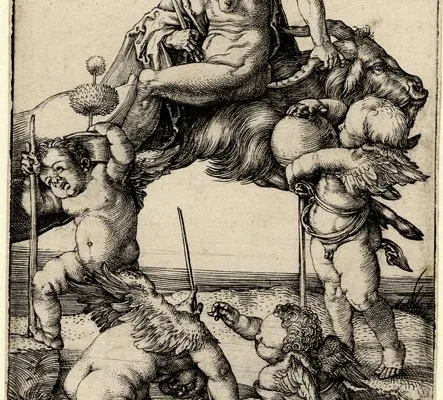
At the Tarn

No halter. No brand.
The white horse stood where peat
had given way to open water,
its fetlocks clean.
My brother brought an apple,
rubbed it twice against his shirt,
held out his palm, fingers flat
as Mother taught us.
The horse lowered its head.
He climbed by the mane. I caught
his trailing heel, the buckle
cutting into my thumbnail.
Four hooves entered the tarn.
No splash until the tail went under.
The lilies turned their pale bellies up.
I stood holding his boot.
For nine days Father dragged the water
with hooks meant for pike.
An iron hinge. A bent spoon.
A fish skull, all teeth.
Mother took the boot I saved.
Each Sunday she worked lard
into the leather
to keep it from cracking.
Contributor's note
Sarah Sjöberg is a Norwegian poet and writer with a masters in Scandinavian Studies from Uppsala uni. She is very interested in art too. When she isn't writing, she enjoys reading, gardening, and exploring old bookshops. About the art: In Scandinavian folklore, the Nøkk is a water spirit that sometimes assumes the form of a beautiful horse. It tempts unsuspecting people onto its back before carrying them into the water. Kittelsen's painting belongs to the collection of KODE Art Museums in Bergen.